
Materials
August 31, 202610 min readChoosing Materials For A Custom Boardroom Table
Boardroom table materials come down to two decisions. Stone for the surface, wood for the base, with steel and metal doing structure and detail.
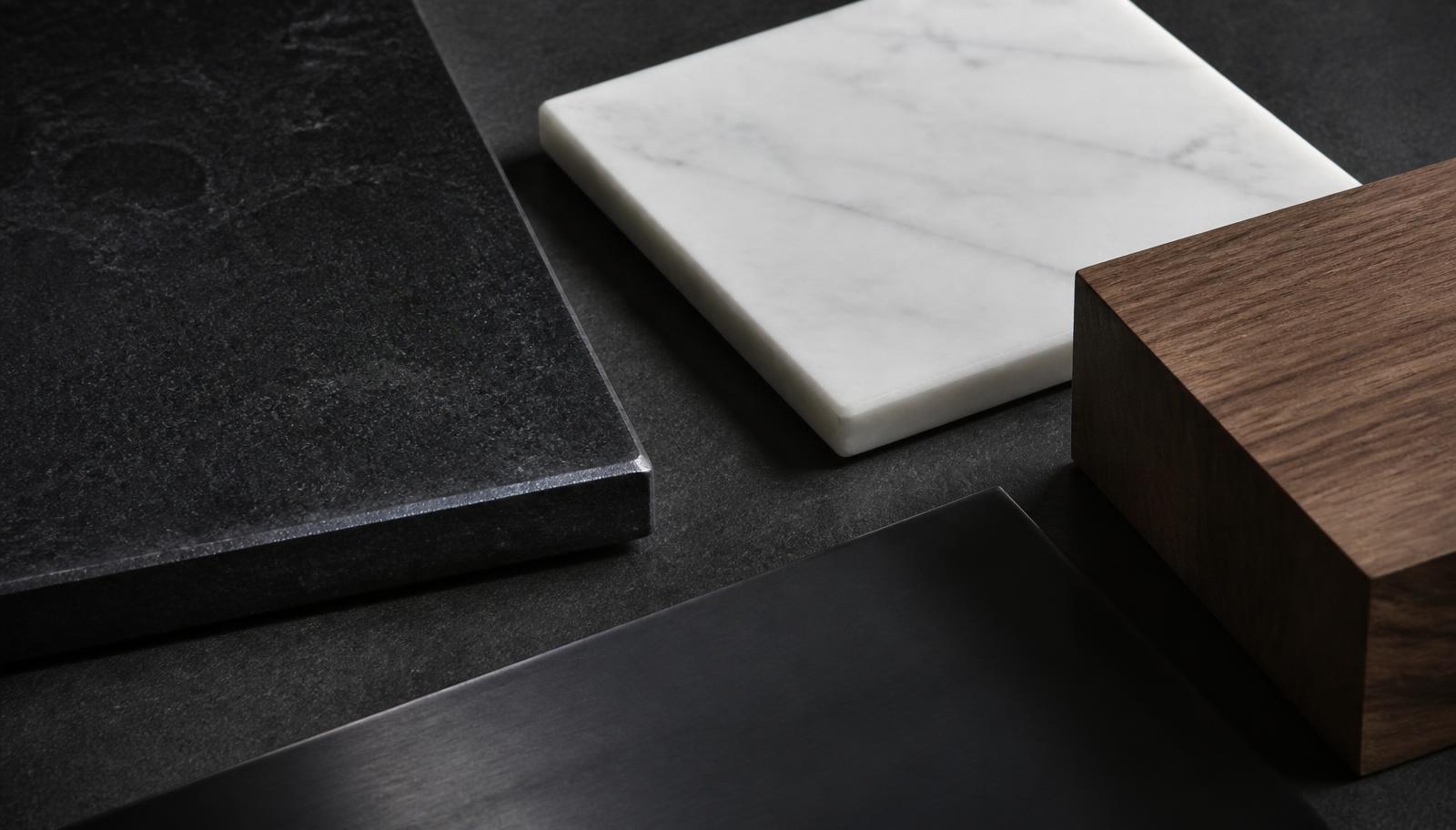
Choosing boardroom table materials is two decisions rather than one long shopping list. The top is stone. The base is wood, usually with steel doing the structural work inside it and metal showing only where it is meant to. Once you separate those two decisions, the rest of the selection stops being a matter of taste and becomes a specification you can hand to someone.
Why The Top Is Stone, And Which Slab Matters More Than Which Species
Stone is the working surface. It takes the wear from laptops, water glasses and eight years of elbows, and it carries the character of the room. Granite, marble and quartzite are all used. Granite and quartzite are generally the more forgiving daily surfaces, while marble is chosen when the pattern is the reason for the table. The more useful question is not which species but which slab, because two granite slabs from different blocks can produce completely different rooms.
A quiet slab keeps a boardroom calm and lets stone wall panels, artwork or a window wall do the talking. A dramatic slab, black marble with heavy white veining for example, becomes the focal point, and everything else in the room should step back once you commit to it. That is a decision to make with the finish schedule in front of you, not from a photograph of a different project.
Thickness and edge profile control how heavy the table reads. A mitered edge makes a top look thicker than the slab actually is, which suits a monolithic design in a large room. A thinner reveal reads lighter and more architectural, which suits a 4 foot wide top in a 16 by 16 executive room. Both approaches are shown across the four design directions.
Finish Changes How The Room Reads Under Its Own Lighting
Finish is the fastest way to change the feel of a boardroom without changing the slab. It also interacts with the lighting that is already installed, which is why the same stone can look formal in one room and flat in another.
- Polished reflects light and reads formal, and it shows fingerprints and dust more readily.
- Honed is matte and even, and it hides day to day use well in a room used every morning.
- Leathered has texture and depth, and it suits dark granite in a moody executive room.
Consider where the downlights land before you settle this. A polished top directly under centered downlighting produces a hot spot in the middle of the table and can throw glare onto a display at the far end. The same slab honed will absorb that lighting quietly. Leathered stone sits between the two and holds its texture under indirect light, which is why it works well in rooms with cove lighting or an LED reveal under the top edge.
Slab Layout Is A Design Decision Made Before Anything Is Cut
Slabs are not uniform, so where the veining lands is a decision, not an accident. Veining gets positioned so the strongest figure runs through the middle of the top where people sit and look, rather than dying under the credenza end. On a mitered edge the pattern carries around the corner and down instead of stopping at the joint, and on a waterfall panel it continues to the floor as one continuous run.
On long tops the layout also decides where seams go. A 20 foot table is built in sections, and the seams are placed where the veining can absorb them rather than through the most visible figure in the slab. That layout gets confirmed with the client before fabrication, which is the difference between a stone top and a stone top that looks intentional. Any logo engraving or contrasting inlay is positioned in the same review, because both compete with veining for attention.
Wood And Metal Do The Work Below The Surface
Bases are solid walnut and white oak, fluted or flat panel, in pedestal or twin base configurations. Wood is used for bases rather than tops because it is the right material for structure and proportion, and stone is the right material for a surface people use every day. A twin base spreads support on a long top and keeps knee clearance clean at every seat, while a single pedestal suits shorter square and round formats where the base is a visual anchor.
Stain and sheen are matched against the millwork, doors and casework already in the room, so the table belongs to the space rather than sitting in it. Walnut reads warmer and darker and pairs naturally with black granite. White oak takes stain more predictably when it has to agree with existing millwork in a room somebody else specified. Fluting adds shadow and detail on a 5 foot wide base that would otherwise read as a slab of wood.
Steel carries long spans inside the substructure where nobody sees it. Where metal does show, it shows deliberately: reveals, Schluter trim and base detail in blackened or brushed finishes, matched to the door hardware and light fixtures already specified. The full range is on materials and finishes.
Solid wood moves with humidity, and Arizona interiors swing from very dry winter air to cooled summer air on a daily cycle. That is why bases are built as solid panels and pedestals engineered for that movement rather than as veneered boxes, and why fluting is cut into solid stock instead of applied. The steel substructure carries the stone regardless of what the wood is doing, so the top stays flat and the base stays tight at the joints.
Remnant use is worth raising early too. A 16 foot top rarely uses a full slab, and what is left is usually enough for a credenza top, a pair of side tables or a stone monogram panel on the wall. Deciding that during slab selection means the pieces come from the same block and read as one commission. Deciding it a year later means matching a slab that has already sold.
Three Combinations That Hold Up In Real Rooms
Black leathered granite on a fluted solid walnut base is the combination that reads most like an executive boardroom without any additional detail. The leathered finish absorbs the overhead light instead of bouncing it, the walnut warms the room, and the fluting breaks up what would otherwise be a large flat mass of wood under a 5 foot wide top. It photographs well and it also survives daily use, which is not always the same thing.
Marble with strong veining on a flat panel white oak base goes the other direction. The slab is the subject, so the base steps back into a quieter species and a plainer profile, and the edge is usually mitered so the pattern carries down the side. This is the combination that needs the slab layout review most, because a 16 foot top means the veining has to be planned across sections rather than hoped for.
Quartzite honed on a twin pedestal base with a blackened metal reveal suits a room with a lot of glass and daylight. Honed quartzite handles direct sun without the glare a polished top produces at 3pm in an Arizona west facing suite, and the metal reveal ties the table back to door hardware and window frames that are already dark. Small decisions like that reveal are what make a table look designed for the room rather than delivered to it.
Living With A Stone Top After Installation
Stone is the durable choice, not a fragile one, but the finish decides how forgiving it is day to day. A honed or leathered surface hides water rings, dust and the fine scuffs that come from laptops sliding across it. Polished stone shows all three, which is fine in a room used twice a month for board meetings and less pleasant in a room where twelve people eat lunch on Fridays. That is a usage question worth answering honestly before the finish is chosen.
The other practical point is repair. Stone can be cleaned, refinished and touched up in place in a way that a damaged laminate or veneer top cannot, which is part of why the material makes sense on a table meant to stay in a room for a decade or more. Wood bases are solid rather than veneered for the same reason, since a solid walnut edge takes a knock from a chair arm without the delamination a veneered panel shows.
Matching A Table To An Interior That Already Exists
The most useful thing you can send is the finish schedule. Failing that, samples, or clear photographs of the room in its own light. From there the selection runs backward from what is already installed: stone that agrees with the floor and wall finishes, wood species and stain that agree with the millwork, metal finish that agrees with the hardware.
That is a specification exercise rather than a taste exercise, which is why designers and architects usually hand it over as a schedule and expect dimensioned drawings back. Business owners furnishing a new suite in Scottsdale or Paradise Valley tend to arrive with photographs instead, which works just as well as a starting point.
Once the top and base are settled, material becomes detail: a logo engraved into the stone or inlaid from a contrasting slab, metal reveal trim, LED lighting at the top edge or inside the base, and companion coffee, end and lounge pieces built from the same slab and the same wood. Those live in the Full Custom direction, and how they compare to a catalog table is covered in custom vs standard. If you have a room and a schedule, send them over and we will come back with a material selection for it.